Key Highlights: A crane load chart is the manufacturer’s specification for a mobile crane’s maximum safe lifting capacity. The capacities change depending on boom length, working radius, and crane configuration. Knowing how to read a load chart, apply the net capacity formula, and recognise the safety thresholds that govern critical lifts is crucial for any project manager, site supervisor, or crane operator working in Thailand’s construction and industrial sectors. This guide covers every component of a mobile crane load chart.
A crane load chart is one of the most important safety documents in any lifting operation. Understanding a load chart is crucial for project managers, site supervisors, and procurement teams to avoid overloading and ensure safe operations.
This guide helps you read a crane load chart and apply the mobile crane load calculation formula correctly.
What Is a Crane Load Chart?
A crane load chart is the manufacturer’s specification for a crane’s maximum safe lifting capacity under defined operating conditions. It is built on core engineering parameters: structural strength, hydraulic performance, and stability design.
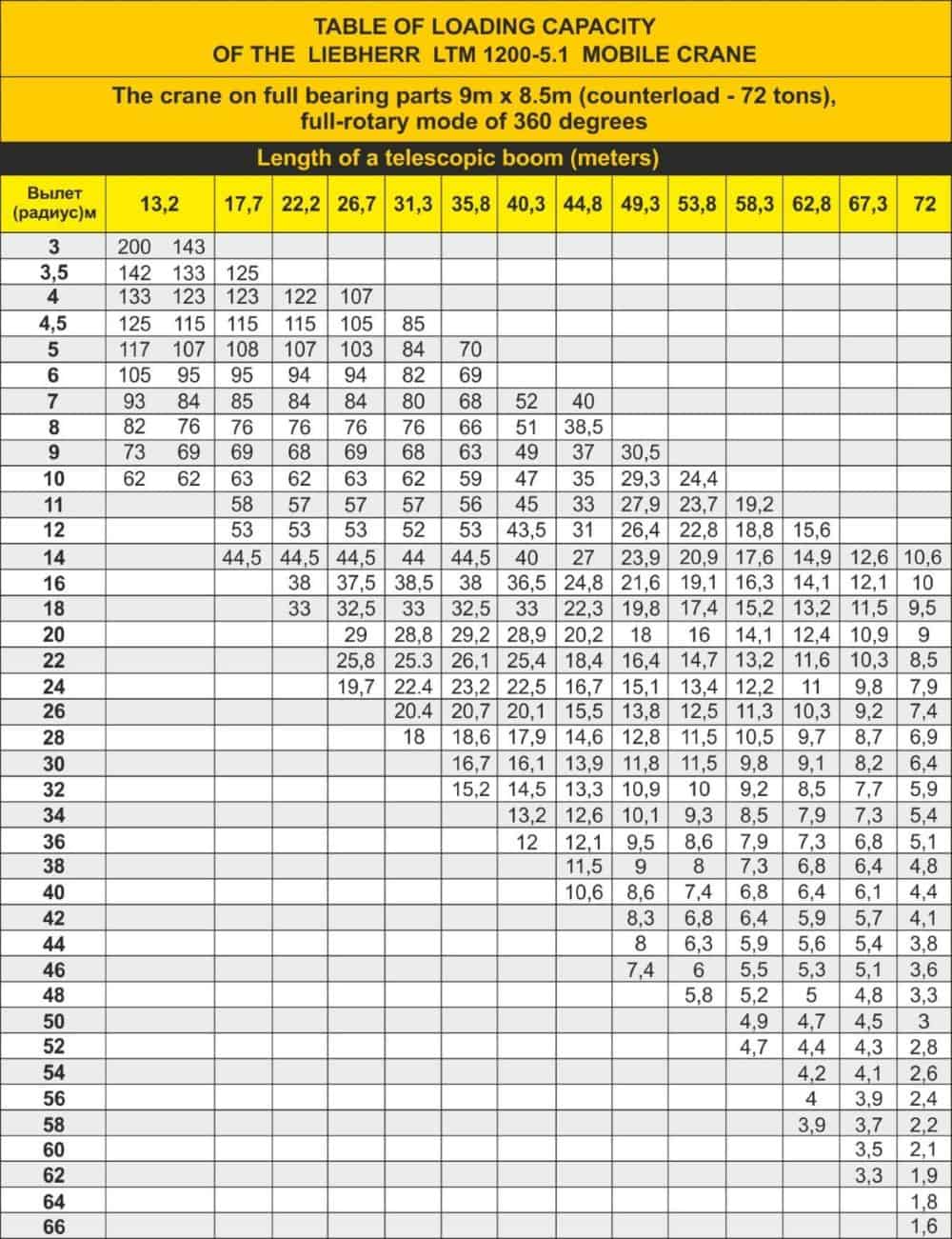
A load chart does not give you a single number. Crane capacity is a dynamic variable. It changes depending on boom length, working radius, boom angle, counterweight configuration, and outrigger deployment. For example, a crane with a maximum gross capacity of 100 tonnes may only be rated for 15–20 tonnes at a 15-metre working radius with its boom fully extended.
Each crane model comes with a unique load chart, and a crane can have several charts for various configurations. Using an incorrect chart for a crane model or applying a full-outrigger chart to partial outriggers is a dangerous mistake that has led to accidents.
Every operator, rigging supervisor, and site foreman involved in planning or overseeing a lift must be able to locate, identify, and correctly read the chart that applies to their specific configuration.
Key Factors of a Mobile Crane Load Chart
A standard mobile crane load chart contains several data sets that affect each other. The table below covers the key components:
Factor
Definition
Working radius (lifting radius)
Horizontal distance from the crane’s centre pin (slew axis) to the centre of the load
Boom length
The extended length of the crane’s boom is typically listed as column headers across the top of the chart
Boom angle
The elevation angle of the boom above the horizontal, which determines height and directly affects the radius
Rated capacity (gross)
The maximum load in tonnes at the intersection of a given boom length and working radius (before rigging deductions)
Counterweight configuration
The specific counterweight arrangement the chart applies to (charts for different counterweight loads are separate)
Outrigger deployment state
Whether outriggers are fully extended, partially extended, or retracted. This changes capacity significantly
The bold line or dashed boundary
Divides values governed by structural limits (above the line) from values governed by stability limits (below the line)
The inverse relationship between working radius and capacity governs the entire chart.
As the load moves further from the crane’s centre pin, the rated capacity falls, and this value could change significantly. The longer the arm, the greater the overturning moment it creates. Counterweights exist to offset this moment, but they have limits.
The bold boundary line that may sometimes appear on load charts shows two thresholds: values above this line are limited by the crane’s structural strength. Values below it are limited by stability (or the crane’s resistance to tipping). Both sets of limits are absolute and should not be exceeded.
The Mobile Crane Load Calculation Formula
Once you have located the gross rated capacity on your mobile crane load chart, apply the mobile crane load calculation formula to convert it into a usable net lifting capacity:
Net Lifting Capacity = Gross Rated Capacity (from chart) − Total Rigging Deductions
Rigging deductions are the combined weight of all equipment attached to the hook that is not the load itself. These include:
Hook block: The pulley block assembly through which the hoist line passes
Wire rope slings or chain slings: The connecting hardware between hook and load
Spreader bars or lifting beams: Used when the load requires distributed attachment points
Shackles and other rigging hardware: Every item attached to the hook line contributes to the total deduction
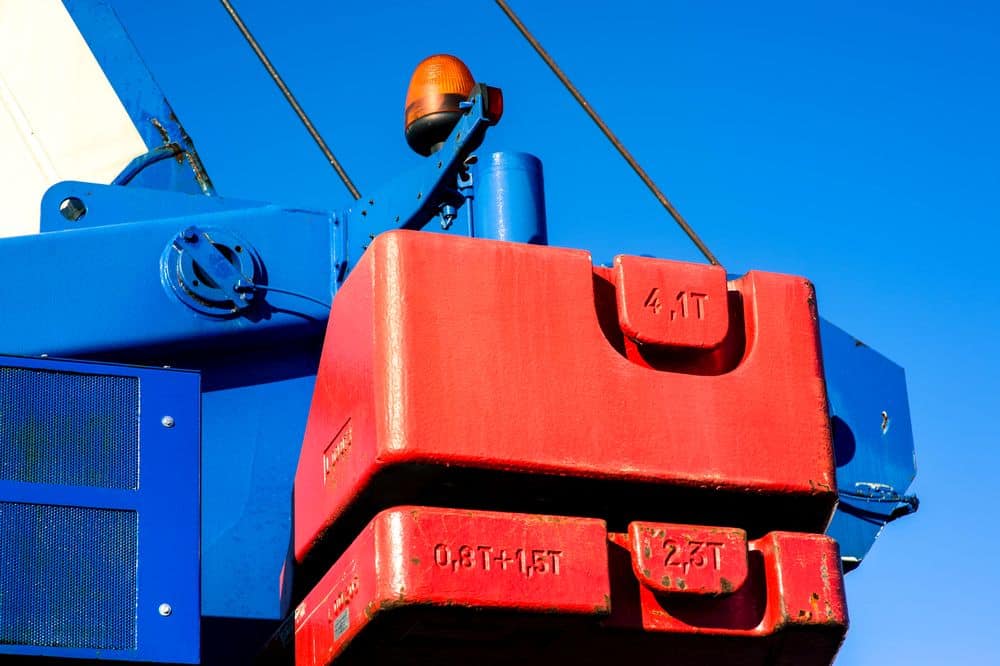
As a practical example: if the load chart shows a gross rated capacity of 50 tonnes at your working radius and boom length, and your rigging assembly totals 2.3 tonnes (hook block 0.8t + slings 1.5t), your net lifting capacity is 47.7 tonnes. Your actual load must not exceed this figure, and responsible practice keeps a meaningful safety margin below it.
Never plan to operate at 100% of the net rated capacity. Industry standards define any lift exceeding 75% of the crane’s rated chart capacity as a critical lift (requires a documented lift plan, formal hazard assessment, and pre-lift briefing before work begins). The 75% threshold exists because of real-world conditions, such as wind, ground movement, and load swing, which introduce variables the chart cannot account for.
How to Read Your Crane Load Chart Step by Step
Caption: Crane operator and site foreman reviewing a range diagram and load chart together before a scheduled lift at an industrial facility in Rayong. Image Alt Tag: Crane operator and site foreman reviewing crane load chart range diagram before industrial lift in Rayong Thailand.
Follow this sequence before every lift.
Identify your working radius: Measure the horizontal distance from the crane’s centre pin (slew axis) to the centre of gravity of the load. This is your operating radius and is the primary variable used to locate your position on the chart.
Determine the required boom length and angle: Based on the height the load must reach and the horizontal distance to the placement point, calculate the minimum boom length and angle needed. The range diagram supplied alongside the load chart provides a visual guide to boom reach, height, and angle relationships.
Confirm your crane configuration: Before reading any capacity figure from the chart, confirm that the configuration on site matches the chart’s stated parameters. Check: counterweight installed (mass and position), outrigger extension state (fully extended, 50%, or retracted), and whether any jib or fly extension is deployed. If the configuration does not match, the chart’s figures do not apply.
Locate the intersection on the chart: Find the column corresponding to your boom length and the row corresponding to your working radius. The value at their intersection is the gross rated capacity for that specific configuration.
Calculate net lifting capacity: Subtract all rigging deductions (hook block, slings, spreader bars, and all attached hardware) from the gross rated capacity. The result is the maximum weight of payload you may safely lift.
Verify the actual load weight and apply a safety margin: Confirm the load’s weight from engineering drawings, material certificates, or weighing. Compare this against your net capacity. For routine lifts, maintain a minimum 25% safety margin below rated net capacity. For any lift exceeding 75% of rated capacity, initiate critical lift procedures.
Safety Considerations When Using Load Charts
A load chart defines maximum capacities under ideal conditions: level ground, calm weather, correct configuration, and verified load weights. Real construction sites in Thailand rarely offer all of these at once. Each of these factors can reduce effective capacity below the chart figure.
Wind Conditions
Wind applies additional lateral forces on both the crane structure and the suspended load. OSHA does not set a fixed wind speed limit. However, under 29 CFR 1926.1417, a competent person must adjust operations for wind. The manufacturer’s operator manual is the authoritative source for each crane’s wind thresholds.
As a general industry reference, most mobile crane operators begin assessing load and configuration at around 20–25 mph (32–40 km/h) and suspend operations as real conditions approach or exceed that range. This is important, especially during Thailand’s monsoon season, when wind on construction sites may affect construction safety.
Ground Conditions and Site Slope
All outrigger-based load chart values assume level, firm, and stable ground with a slope no greater than 1 degree. A slope of 3 degrees can shift the crane’s centre of gravity sufficiently to reduce effective capacity by 15–20% compared to the chart value. Before positioning any mobile crane, the ground-bearing capacity must be assessed and, where required, outrigger mats or steel pads deployed to distribute the load. Sites with recently filled ground, drainage channels, or underground utilities require special attention.
The 75% Rule for Critical Lifts
As noted above, any lift exceeding 75% of the crane’s rated chart capacity is classified as a critical lift. This classification triggers a higher standard of planning: a written lift plan must be prepared by a qualified person, all relevant personnel must be briefed, and the lift must be reviewed and approved before execution.
Using the Correct Chart for Your Specific Crane
Load charts are specific to a crane’s serial number and exact configuration. Two cranes of the same model but different production years may have different rated capacities. A chart prepared for a crane with a full counterweight must never be applied to one with a partial counterweight. Always verify the chart corresponds to the specific crane and configuration being used.
When to Consult a Professional Crane Service
For lifts near power lines, over occupied structures or active roadways, involving multiple cranes, or at the upper range of rated capacity, the planning and execution should involve an experienced crane service provider from the outset. Professional crane rental companies with strong safety records offer technical expertise to verify that every chart parameter is met before the lift begins.
Trust EK Crane’s Expert Teams for Safe Mobile Crane Operations
In Bangkok, Rayong, and the EEC zone, where ground conditions, sequencing, and safety obligations leave no room for estimation, responsible crane service operators who apply load chart discipline correctly can prevent an unwanted accident.
EK Crane provides mobile crane rental with an experienced team who will help you choose the best crane suitable for your project. Our renting service provides both daily and monthly rentals for every area in Thailand. For more information on mobile crane rental price, contact LINE: @EKCRANE or reach us via the contact information below.
A crane load chart is the manufacturer’s specification for a crane’s maximum safe lifting capacity under defined operating conditions. It is presented as a grid with working radius on one axis and boom length on the other so operators can read the gross rated capacity for any given configuration. A single crane will have multiple charts to cover different outrigger positions, counterweight arrangements, and boom extensions.
2) How do you calculate mobile crane lifting capacity?
Locate the gross rated capacity on the load chart at your working radius and boom length. Then subtract all rigging deductions: hook block, slings, spreader bars, and any attached hardware. The result is the net lifting capacity, which is the maximum payload weight you may safely lift.
3) What is the 75% rule in crane operations?
Any lift exceeding 75% of the crane’s gross rated chart capacity is classified as a critical lift under OSHA standards. It requires a written lift plan, a pre-lift crew briefing, and review by a qualified person before work begins. The threshold exists because wind, ground movement, and load swing can reduce effective capacity below what the chart shows under ideal conditions.
4) What factors reduce a mobile crane’s safe lifting capacity below the load chart figure?
Load charts assume still air, level ground, and the exact configuration stated on the chart. Wind adds lateral forces the chart does not account for. A ground slope beyond 1 degree shifts the crane’s centre of gravity and reduces stability. Soft ground under outriggers compromises the rated support area. Using a configuration that differs from the chart, such as partial outrigger extension or reduced counterweight, can also invalidate the chart figures entirely.
What to Know About Construction Laws and Safety in Thailand
Key Takeaways Thailand’s construction industry and building regulations are governed by three core legal frameworks: the Occupational Safety, Health and Environment Act B.E. 2554, the Ministerial Regulation on Machines, Cranes and Boilers B.E. 2564, and the Building Control Act B.E. 2522. Contractors must comply with strict requirements covering building permits, on-site safety planning, worker protection, equipment inspections, and zoning rules. Non-compliance risks project delays, financial penalties, and increased accident exposure. Working with professional partners such as EK Crane helps contractors meet safety and regulatory obligations on every lifting operation.
All building projects in Thailand are governed by a framework of laws, ministerial rules, and local bylaws. They dictate building design, site management, and worker safety. Getting construction law in Thailand wrong can lead to permit refusals, fines, or forced shutdowns, and getting it very wrong can mean fatalities. Construction safety failures have led to criminal prosecutions and fatal accidents across the country, particularly where crane operations or structural work at height are involved.
Let us walk you through what you should know about construction safety and building regulations in Thailand.
Overview of Construction Law in Thailand
Three primary legal frameworks govern construction safety and building standards in Thailand.
First is the Occupational Safety, Health and Environment Act B.E. 2554 (2011), the principal workplace safety legislation. It requires employers to conduct risk assessments, deliver safety training, and appoint qualified safety officers. Enforcement is handled by the Department of Labour Protection and Welfare (DLPW), which conducts both routine and complaint-based site inspections.
Crane operations fall specifically under the Ministerial Regulation on Machines, Cranes and Boilers B.E. 2564 (2021). Any crane with a safe working load exceeding three tonnes must be inspected by a licensed engineer at least every three months. Operators must hold valid certifications, and maintenance records must be kept on site.
Then there’s the Building Control Act B.E. 2522 (1979), which governs building permits, structural standards, fire safety, and zoning. A construction permit (Aor. 1) is required before any building work begins in a controlled area, and that covers most urban and semi-urban zones in Thailand.
Construction Safety Requirements on Site
Under the OSH Act, employers must prepare written risk assessments before work begins. These assessments identify hazardous zones, including crane swing radii, elevated platforms, and excavation edges, and prescribe control measures for each. PPE is mandatory: helmets, safety footwear, high-visibility clothing, eye protection, and full-body harnesses for anyone working at height. If a worker is found without required PPE during inspection, the employer faces penalties, not the worker.
The Ministerial Regulation B.E. 2564 requires regular inspection of all cranes, hoists, and lifting accessories. Riggers should check wire ropes, slings, and shackles before each use and replace them at the first sign of wear or deformation. Scaffolding requires daily visual checks and formal inspections after any modification or adverse weather event.
Building Regulations Thailand: What Applies to Construction Projects
You can’t start building work in a controlled area without a construction permit. Applications must include architectural and engineering plans, proof of land ownership, and a licensed construction supervisor, and local authorities have 45 days to approve or reject them.
Starting without a valid permit can result in stop-work orders, fines, or demolition at the owner’s expense. Large-scale projects may also require an Environmental Impact Assessment (EIA), which can add 4 to 6 months.
Structural standards cover load-bearing capacity, fire resistance, and ventilation, with high-rise buildings (23 metres or more) subject to additional requirements. There are also oning regulations under the Town Planning Act B.E. 2518, which restrict building height, floor area, and use by zone. Build in the wrong zone, and you risk permit refusal or, worse, orders to demolish completed work.
Contractor Responsibilities and Common Risks
Contractors must appoint qualified safety officers, notify the DLPW before commencing operations, and maintain documented safety management plans. The OSH Act places primary responsibility on the employer, regardless of the number of subcontracting layers. Thai law also requires clear construction contracts defining scope, standards, and safety responsibilities. These obligations can’t be contracted away to a subcontractor.
Failing to adhere to these requirements carries real consequences, such as stop-work orders, daily fines, and permit suspension or revocation. If there are instances of negligence that result in injury or death, criminal prosecution is also possible. Non-compliance is also the direct precursor to crane collapses, scaffold failures, and struck-by incidents on Thai construction sites.
The Role of Professional Crane Services in Construction Safety
Crane operations are among the highest-risk activities on any construction site.
With that, a professional provider of mobile cranes in Thailand prepares a lifting plan for every deployment, specifying the crane configuration, rigging method, load path, exclusion zones, and contingency procedures. That lifting plan is the primary document demonstrating compliance with the Ministerial Regulation B.E. 2564 and the broader OSH Act.
Take EK Crane, for instance, where we have provided mobile crane rental services across Thailand for over 30 years. Our projects range from oil refineries in Rayong to industrial developments across the EEC zone, and every deployment begins with a site survey and lifting plan. Our fleet is maintained to the inspection standards required by Thai law, and all operators hold current certifications. For contractors, that translates to a documented, verifiable record of safe equipment and planned lifting operations, supporting their own compliance from day one.
Find the Right Lifting Operations with EK Crane Today
If your project requires lifting operations, choosing a crane rental partner with a proven safety record is one of the most effective steps you can take to protect your workers and your compliance status. A professional crane service replaces regulatory complexity with a planned, documented, and safely executed operation.
That’s where we come in. EK Crane offers renting services for mobile cranes in Thailand with a full team of professional operators. Our operations are safe and efficient with experienced employees, and we also offer a consultant and a field survey to help you choose the best crane for your project. Our rental service offers daily and monthly rentals across all areas of Thailand, providing lift operations all the way for your projects.
Contact EK Crane today for your project’s needs. Our team will survey your site, prepare a lifting plan, and provide the right crane and crew for the job.
For more information, contact LINE: @EKCRANE or the contact information below.
Frequently Asked Questions About Construction Safety and Building Regulations in Thailand
Q1: What are the main laws governing construction safety in Thailand?
Three core frameworks apply: the Occupational Safety, Health and Environment Act B.E. 2554 (2011) covering workplace safety and risk assessment; the Ministerial Regulation on Machines, Cranes and Boilers B.E. 2564 (2021) setting crane inspection and operator standards; and the Building Control Act B.E. 2522 (1979) governing permits, structural standards, and zoning.
Q2: Do I need a building permit before starting construction in Thailand?
Yes. A construction permit (Aor. 1) is required before starting building work in any controlled area, which covers most urban and semi-urban zones. Applications require detailed plans, proof of land ownership, and a licensed construction supervisor. Large-scale projects may also need an approved Environmental Impact Assessment.
Q3: How often must cranes be inspected on a Thai construction site?
Under the Ministerial Regulation B.E. 2564, cranes exceeding the safe working load of three tonnes must be inspected by a licensed engineer at least every three months. Rigging hardware must be checked before every use and replaced when it shows wear or damage.
Q4: What happens if a contractor fails to comply with Thai construction safety regulations?
Consequences include stop-work orders, daily fines, permit suspension or revocation, and criminal prosecution where negligence causes injury or death. Non-compliance also leads to project delays, insurance complications, and reputational damage affecting future contracts.
What Is the Role of the Site Foreman in Construction?
Key Highlights A construction foreman is the frontline supervisor who liaises between site workers and project management, directing daily operations, enforcing safety standards, and maintaining schedule compliance. In Thailand’s construction industry, the foreman is the key coordinator between ground crews, crane operators, and project management during crane and heavy-lift operations. Understanding the foreman’s responsibilities helps construction teams build more efficient, safer, and integrated project environments.
In any efficient construction project, the site foreman is the key coordinator. But what is a foreman, and why does their contribution matter so much? From directing daily workflows to enforcing safety standards at a busy site, this guide explains what a foreman is in construction.
What Is a Foreman in Construction?
A construction foreman (sometimes referred to as a site foreman or works foreman) is the supervisor responsible for directing on-site operations on a day-to-day basis. Unlike a project manager who works primarily at a strategic and financial level, the foreman is physically present on site, managing the actual work as it unfolds.
Most foremen are promoted carpenters, structural steel fixers, concrete specialists, or mechanical tradespeople who have demonstrated both technical competence and the leadership qualities required to direct a crew under pressure. This allows them to understand the work from the ground up. This combination also helps them gauge what is actually achievable on any given day.
In Thailand’s construction industry, foremen operate across a wide range of project types:
General building construction: Residential towers, commercial developments, and mixed-use projects
Civil infrastructure: Roads, bridges, drainage systems, and mass transit construction
Industrial facilities: Factories, warehouses, refineries, and power generation sites
Large-scale infrastructure: Airport expansions, port facilities, and EEC zone development projects
Within the hierarchy, the foreman is between the workers they supervise and the superintendent or project manager above them. They receive direction from management and translate it into specific, actionable daily tasks for the crew.
Primary Responsibilities of a Construction Foreman
The job of a foreman covers a broad range of daily responsibilities, including keeping construction work on track. Below are the core areas every construction foreman must manage.
Team Supervision and Task Delegation
The foreman assigns daily tasks to workers based on project priorities, individual skill sets, and available resources. Effective delegation can minimize costly downtime and prevent mistakes caused by mismatched skills and tasks. On larger sites, a foreman may oversee multiple sub-crews working simultaneously across different areas.
Schedule Management and Progress Tracking
Foremen are responsible for maintaining the daily work pace against the broader project timeline. Naturally, delays may happen from material shortages, adverse weather, equipment breakdowns, or subcontractor issues. When these arise, the foreman must adapt quickly and communicate the impact upward to site management. They are accountable for their crew’s daily output.
Safety Protocol Implementation
A site foreman is also responsible for crew safety and preventing on-site accidents. Their responsibilities include conducting toolbox talks at the start of each shift, enforcing PPE requirements, monitoring hazardous work zones, and ensuring all workers are briefed before high-risk activities (such as crane lifts).
Liaising Between Crews and Management
The foreman is the central point of communication linking ground-level workers with site management, clients, and subcontractors. Clear, timely, and accurate communication from the foreman prevents misalignment, avoids rework, and keeps all parties operating from the same information.
Quality Control and Specification Compliance
Foremen inspect work as it progresses, checking dimensions, materials, structural tolerances, and finishes against project specifications. Any deviation that passes the foreman unchecked risks costly and time-consuming remediation further down the project. The foreman’s quality eye is a direct contributor to the overall standard of the finished build.
The Skills Every Foreman Needs
The most effective construction foremen combine deep trade knowledge with leadership, communication, and safety disciplines.
Skill Area
Scope
Blueprint and plan reading
Foremen must interpret construction drawings accurately and relay instructions to crews without error
Leadership and decision-making
Motivating workers, maintaining morale under pressure, and making fast operational decisions
Clear communication
Giving precise instructions to crews, writing daily progress reports, and briefing management concisely
Problem-solving
Resolving on-site conflicts, adapting to unexpected challenges, and finding solutions under tight timelines
Safety-first mindset
Identifying hazards, enforcing PPE use, and maintaining compliance with construction safety standards
Equipment awareness
Understanding the capabilities and limitations of site equipment, including cranes, hoists, and material handlers
The Foreman’s Role in Crane Operations
In Thailand’s construction, industrial, and infrastructure sectors, mobile crane operations are a routine part of project execution. Here, the foreman is directly involved in ensuring the safety of crane lifts.
During any crane service deployment, the foreman must carry out the following:
Coordinating lift schedules: The foreman must coordinate between the crane rental provider and site management to minimise downtime and sequencing conflicts.
Preparing the site: Assessing ground bearing conditions, confirming overhead clearances, and ensuring outrigger pad positions are correctly laid out before the crane arrives.
Managing ground crew positioning: Enforcing safety exclusion zones during active lifts.
Acting as the key communication link: Coordinate communication between the rigging crew and the crane operator, ensuring all signals and instructions are clear.
Reviewing the lifting plan: Ensuring that the crane operator and rigging team are on the same page before each lift.
Overseeing post-lift procedures: Confirming load placement, hook-off, and equipment repositioning for subsequent lifts.
Even with an experienced crane operator at the controls, ground-level coordination ensures a lift is safe, efficient, and on schedule.
Career Path and Professional Development
The transition to foreman is as follows:
Skilled tradesperson: Develop deep technical expertise in a specific construction discipline.
Leading hand: Take on informal supervisory responsibility for a small crew within a larger team.
Site foreman: Lead a full crew or trade package on an active construction project.
Superintendent: Oversee multiple foremen and work packages across a large or complex project.
Project manager: Take full strategic, commercial, and delivery responsibility for project outcomes.
Formal training and recognised certifications accelerate this progression. Experience across different project types also builds significant professional value. A foreman who has managed crane operations on both civil infrastructure and industrial facility projects brings a breadth of problem-solving capability that employers in Thailand’s growing construction and EEC sectors seek out.
Partner with EK Crane for Professional Crane Service
If your construction project involves crane operations for structural lifting, heavy equipment installation, or large-scale material handling, strong foreman coordination combined with a professional crane rental partner is what separates a safe, efficient operation from a costly, avoidable delay.
EK Crane’s teams work directly with site foremen and project management across Thailand to ensure every crane deployment is properly planned and executed. From initial site surveys to pre-lift operator briefings, our crane service is designed to support foremen in delivering safe, coordinated lifting operations, whether that is a single daily lift or a complex multi-crane industrial project.
EK Crane also offers mobile crane Thailand rentals with a full team of professional operators. Our operation is safe and efficient with experienced employees. We also offer consulting and field surveys to help you choose the best crane that is suitable for your project. For more information, contact LINE: @EKCRANE or reach us via the information below.
Crane Safety Guidelines for Construction Sites. (2024). Department of Labour Protection and Welfare, Thailand. Retrieved March 2026, from https://www.labour.go.th
Frequently Asked Questions About Foreman in Construction
1) What is a foreman in construction?
A construction foreman supervises a site crew day to day. They are in charge of assigning tasks, enforcing safety standards, and acting as the link between workers and project management. Most foremen come up through the trades, which gives them the technical grounding to manage work they have done themselves.
2) What does a foreman do on a construction site?
A foreman assigns daily tasks, runs pre-shift safety briefings, checks work against specifications, and reports progress to the superintendent or project manager. During crane and heavy-lift operations, they manage ground crew positioning, maintain exclusion zones, and confirm that the lift plan is followed by everyone on site.
3) What qualifications does a construction foreman need in Thailand?
Most foremen in Thailand qualify through trade experience rather than a single credential. Certifications in OHS, site supervision, and crane operation awareness carry growing weight with employers, particularly on industrial and infrastructure projects. The Department of Skill Development under the Ministry of Labour administers recognised skills training and occupational standards for the construction sector.
4) Why is the foreman important during crane operations?
The foreman coordinates between the crane operator, rigging crew, and the rest of the site. They prepare the ground, manage personnel safety during the lift, and make sure the lifting plan is followed. Without that coordination, even a well-planned lift becomes a risk.